
What a Monroe County Court Docket Shows
A docket is a chronological log. It lists the events in one case in the order they happen. The clerk opens the docket when a case is filed and adds a line each time something is entered, such as a motion, a hearing, an order, or a judgment. Each line carries a date and a short label. The docket is the spine of the case, while the full file holds the actual paper behind every entry.
In Monroe County, the Circuit Clerk keeps a general court docket that records names and parties in each case, pleas, indictments, lower-court appeal records, and related papers. The Chancery Clerk keeps dockets and minute books for equity and family matters. A docket entry will not give you the full text of a ruling. It tells you that a ruling happened, when it happened, and where to find the underlying document in the file.
Typical entries on a Monroe County docket include the following kinds of events.
- Filing of a complaint, petition, or indictment
- Service of process and returns
- Motions and the orders that answer them
- Hearing and trial settings, including continuances
- Judgment, disposition, and post-judgment enforcement
Where Monroe County Court Dockets Come From
No single free portal lists every Monroe County case. Dockets are split across the courts that create them. The two main trial-court dockets belong to Circuit Court and Chancery Court, both seated in Aberdeen. Lower-court dockets belong to Justice Court and the city municipal courts. Each court keeps its own docket, so the first task is matching the case to the right court.
Circuit Court holds felony criminal prosecutions, civil lawsuits, and appeals from Justice and municipal courts. The Mississippi Judiciary explains this level on its Circuit Court jurisdiction page, which mirrors how the Monroe County docket is organized. Felony and large civil dockets in Monroe County run through this court.
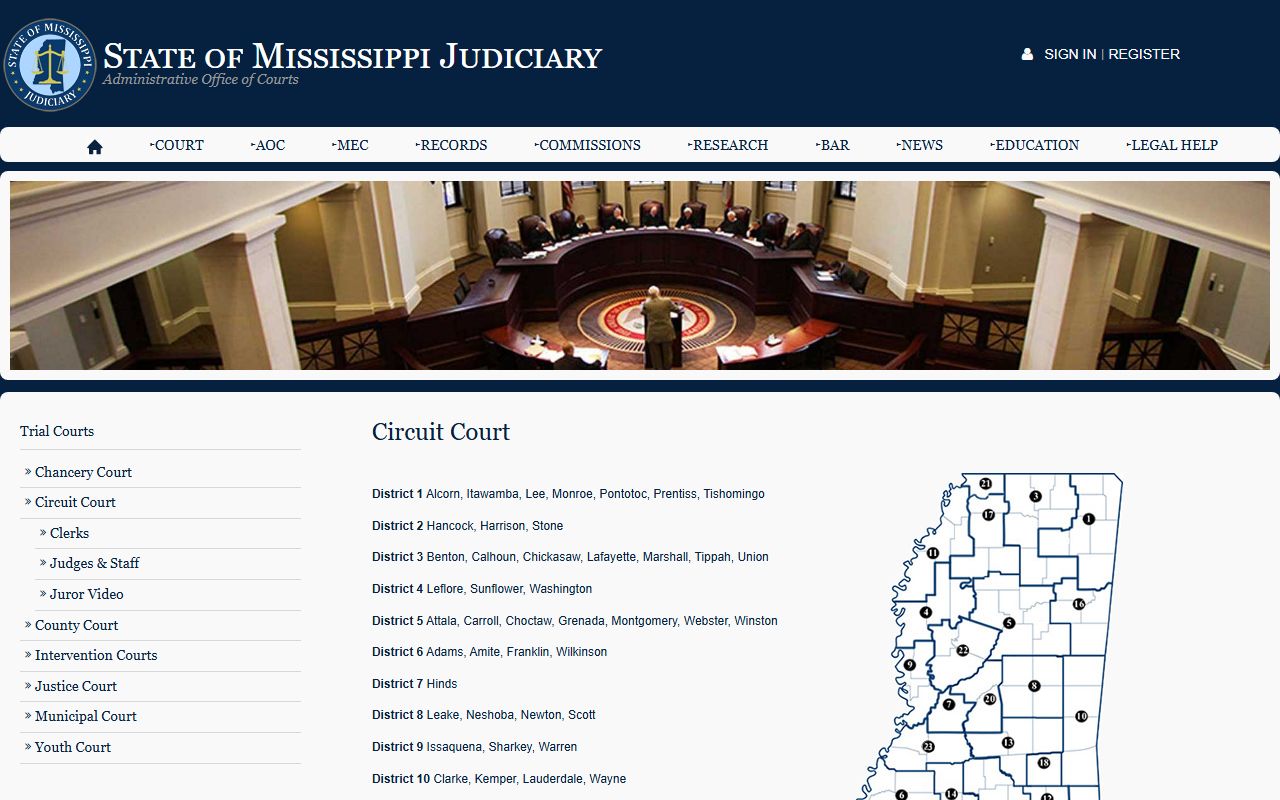
Circuit cases are assigned to a single judge, and the case number ends with the judge's initials plus the county letter, such as PFM, KMM, JWM, or MMM. That suffix on a docket tells you which judge controls the calendar.
Chancery Court handles divorce, custody, adoption, probate, guardianship, conservatorship, land disputes, and civil commitments. Its work is described on the Mississippi Judiciary Chancery Court jurisdiction page, which lines up with the family and estate dockets kept locally. The Chancery Clerk maintains those dockets, minutes, and case files.
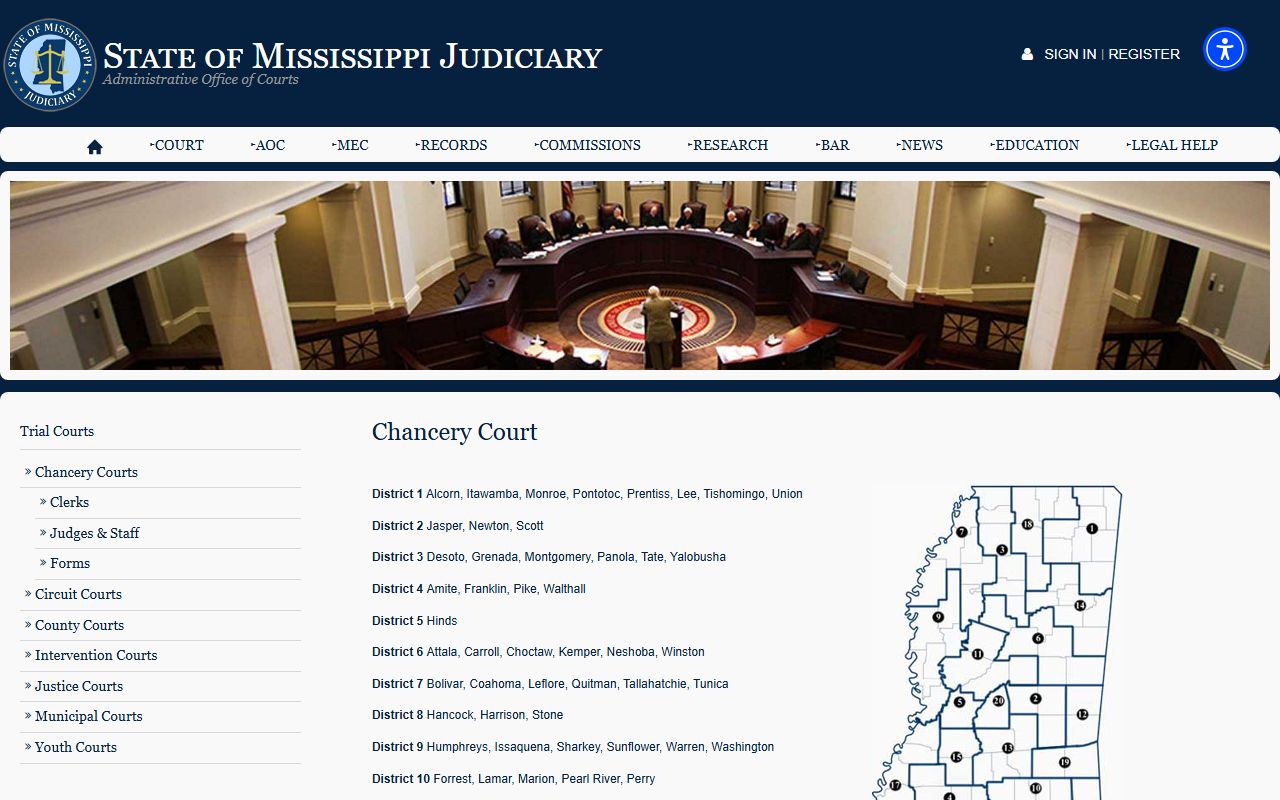
Because probate, divorce, and guardianship sit in Chancery Court, those dockets never appear on the Circuit side. Matching the matter to the court avoids a dead-end search.
How to Find Monroe County Dockets Online
Current Circuit and Chancery cases flow through Mississippi Electronic Courts, known as MEC and its public companion PAMEC. This is the statewide electronic system for Circuit, Chancery, and County Courts. Monroe County Circuit Court went live on the system in May 2022, and Chancery Court followed in June 2022. The Mississippi Judiciary describes how these trial courts fit together on its trial courts overview.
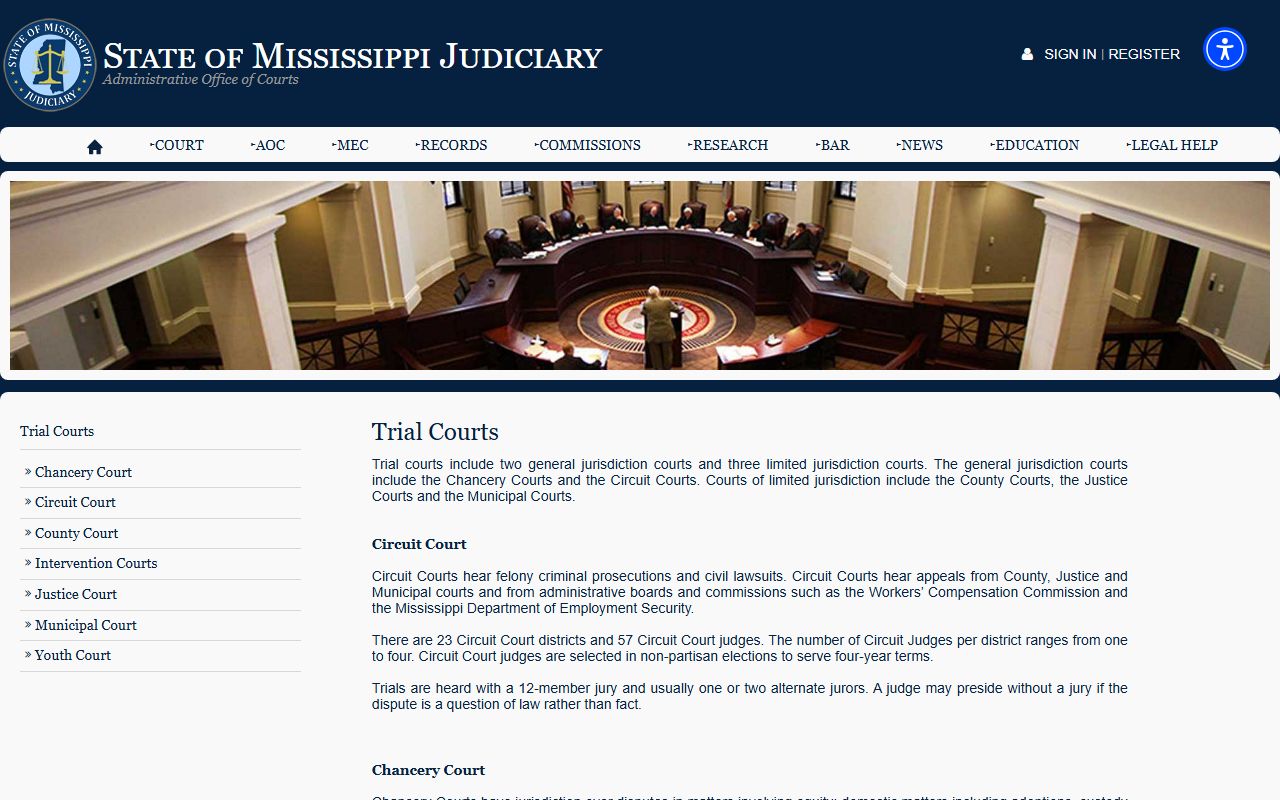
That overview is helpful background, but the docket itself sits behind a login. The public login screen for the system asks for a login, a password, and a client code, so casual browsing is not possible without an account. To reach Circuit or Chancery dockets, follow these steps.
- Register for public access through the PAMEC online registration page to obtain a login and password.
- Choose the right court site. Use the First Circuit MEC address for Circuit Court cases and the First Chancery MEC address for Chancery Court cases.
- Enter your login, password, and client code at the court login screen.
- Search by party name or case number, then open the case to read its docket entries.
Full case details and documents are not openly browsable without that account. For older or non-digitized cases, the docket may exist only on paper at the clerk counter.
First Circuit Calendar and Its Limits
Monroe County sits in Mississippi's First Circuit Court District, which also covers Alcorn, Itawamba, Lee, Pontotoc, Prentiss, and Tishomingo Counties. The district publishes a court-calendar page for its judges. The First Circuit court calendar carries a login and registration notice and a plain warning that the calendar may not be complete.
Treat that calendar as a guide, not a guarantee. A setting can move, a term can be reset, and a new filing may not show up right away. The safest approach pairs the online calendar with a phone call to the clerk before relying on any date. Registration may be required to view some of the calendar detail, which is one more reason a quick clerk call beats an assumption.
Monroe County Circuit Court Terms and Grand Jury
Circuit Court runs on terms rather than a daily docket. Criminal terms in Monroe County Circuit Court are held in February, June, and October. The grand jury convenes three times per year as set by the court calendar, which is why indictments tend to cluster around those term dates. Knowing the term schedule helps you predict when a felony docket fills up.
| Court Activity | When It Happens | What It Affects |
|---|---|---|
| Criminal terms | February, June, October | Felony arraignments, pleas, and trials |
| Grand jury sessions | Three times per year | New indictments and charging documents |
| Civil assignment | Throughout the year | Each case is set with one assigned judge |
A felony case filed between terms may wait for the next term before it moves. The docket will show the filing, then a gap, then a burst of activity around the term date. The full path from charge to sentence is tracked in the Monroe County criminal court records, where the docket and the case file work together.
Note: Term dates can shift for holidays or court business, so confirm any Circuit Court setting with the Circuit Clerk before you travel to Aberdeen.
Justice and Municipal Court Dockets in Monroe County
Not every docket is felony or family. Monroe County Justice Court handles small claims up to $3,500, misdemeanors, traffic offenses outside the cities, and bond and preliminary hearings. The court sits at the Government Complex in Amory. The Mississippi Judiciary outlines this level on its Justice Court jurisdiction page.
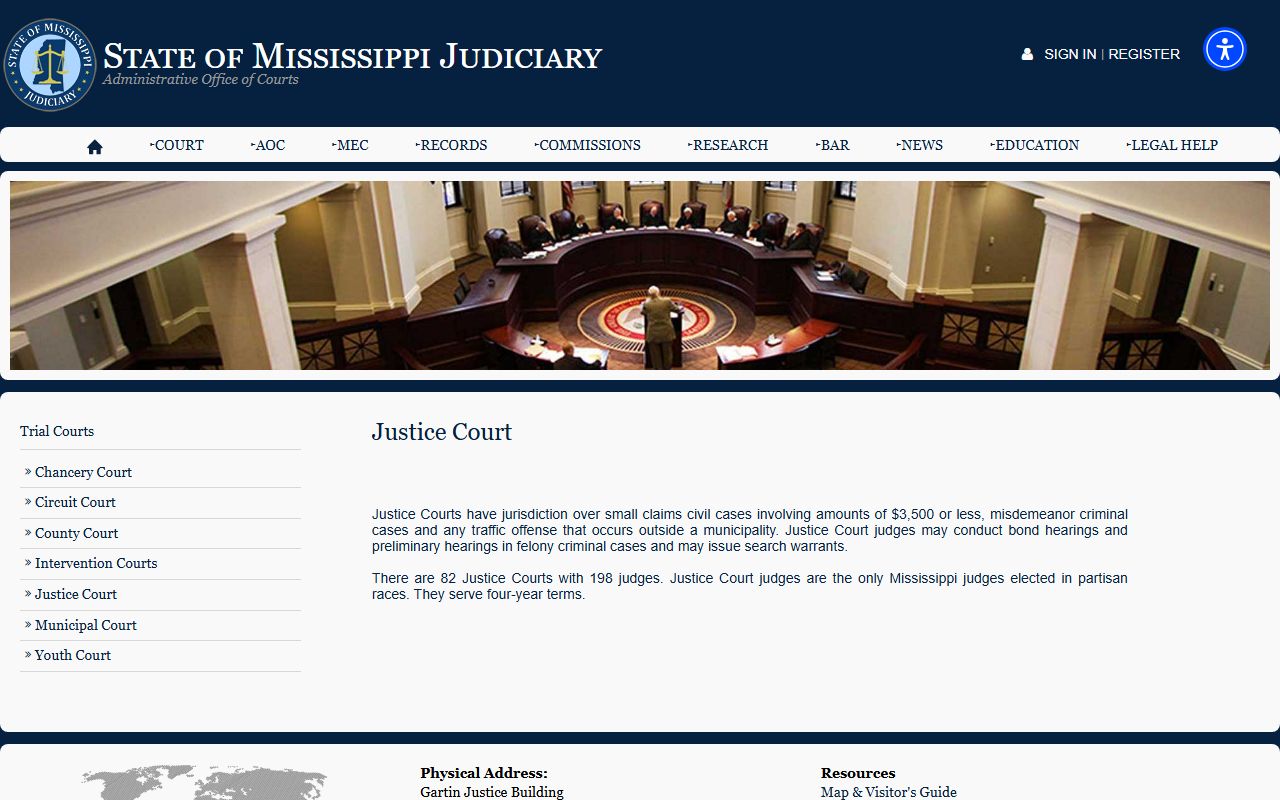
Justice Court does not post a complete public case file online. The county links online fine payments through a payment portal, but that is not a docket search. For a Justice Court court date, the reliable path is a call to the Justice Court clerk in Amory.
City cases sit in municipal court. Amory, Aberdeen, and Smithville each run a municipal court for city traffic, ordinance, and misdemeanor matters. Smithville Municipal Court processes traffic citations, misdemeanor offenses, and code violations, as shown on the town's Smithville Municipal Court page.
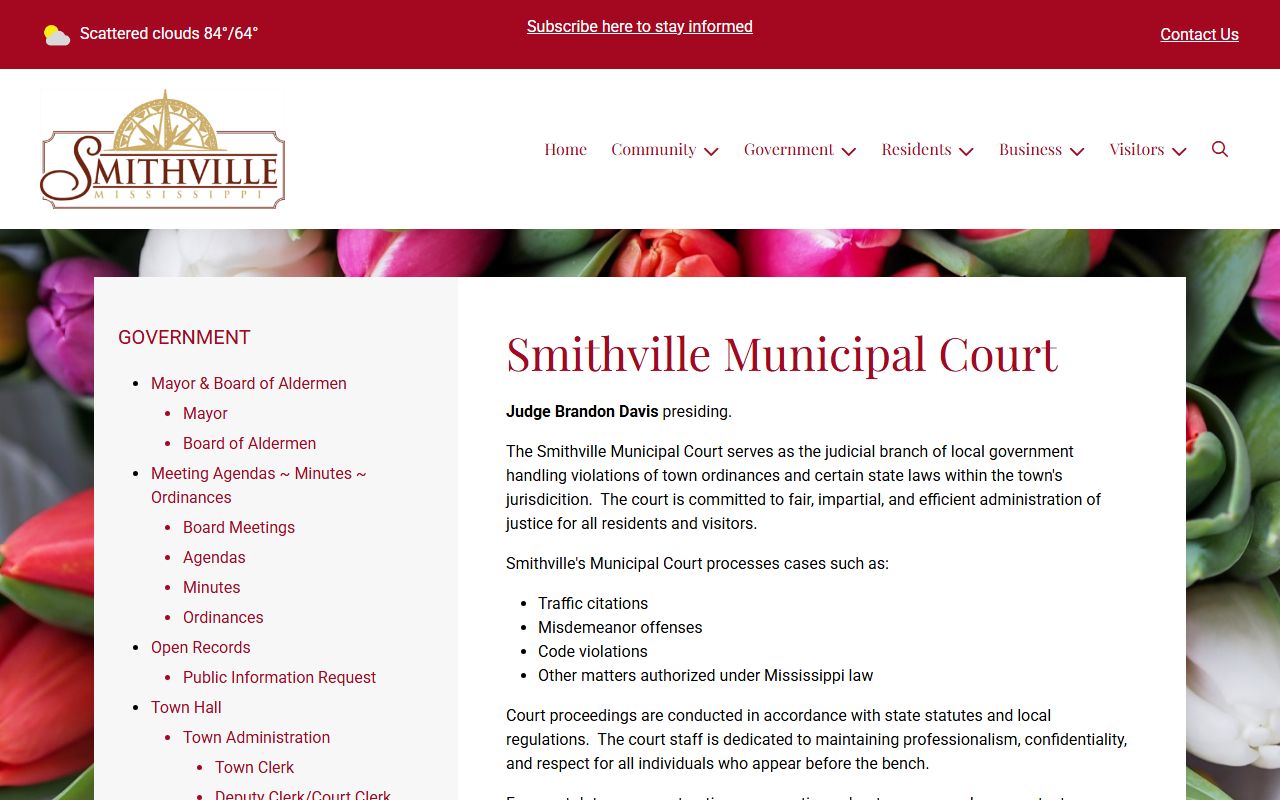
Municipal dockets are kept by city court staff, and court dates come from the city clerk rather than a county database. Each city court sets its own schedule, so the venue of the ticket decides who to call.
Sample Monroe County Docket Entry
A docket entry packs a lot into a short line. Reading one means knowing what each field stands for. The fields below are drawn from the kinds of data a Monroe County Circuit Court docket records, and a Chancery docket follows a similar pattern for family and estate cases.
| Field | What It Shows |
|---|---|
| Case number | The court's tracking number, ending in the judge's initials and county letter |
| Parties | Plaintiff and defendant, or petitioner and respondent |
| Filing date | The date the case or document was entered |
| Docket entries | The dated list of filings, hearings, and events |
| Pleadings | Complaint, answer, indictment, or charging document |
| Orders | The judge's rulings, referenced in the minute book |
| Execution docket | Entries tracking enforcement of a judgment |
| Judgment | The final enforceable decision in the case |
| Bond and fines | Bond details on criminal appeals and fine or assessment accounts |
The minute-book reference points to the official record of the order, kept by the clerk. If a docket line names a judgment but you need the full text, that reference is where the clerk pulls the certified copy.
Monroe County Docket vs Full Case Record
A docket and a full case record are not the same thing. The docket is the index. The full record is everything the index points to, including the actual motions, exhibits, and signed orders. Many people only need the docket to learn a court date or a case status, while a lawyer or a party often needs the full file.
| Docket | Full Case Record | |
|---|---|---|
| Format | List of dated entries | Complete documents and exhibits |
| Detail | Short event labels | Full text of every filing |
| Access | Index level, gated by login | Copies from the clerk, may carry a fee |
| Best use | Tracking dates and progress | Legal review and evidence |
The broader split between index data, downloadable images, and certified copies runs across all Monroe County court records. A docket points the way, but a certified copy from the clerk is what holds up in another proceeding.
Reading a Monroe County Docket
Docket labels lean on a small set of legal terms. A few definitions clear up most of what you will see on a Monroe County docket, whether the case is criminal in Circuit Court or a petition in Chancery Court.
- Docket
- The chronological record of filings, hearings, orders, and case events.
- Disposition
- The outcome of a case, such as a guilty plea, dismissal, conviction, or judgment.
- Continuance
- A rescheduling of a hearing or trial to a later date.
- Motion
- A written request asking the judge to issue an order.
- Order
- The judge's written decision or command.
- Arraignment
- The hearing where charges are read and a plea is entered.
A line reading "Continuance" means the date moved. A line reading "Disposition" means the case reached an outcome. Once the terms make sense, a long docket reads quickly from top to bottom.
When to Call a Monroe County Court Clerk
Calling the clerk is the most reliable docket tool in Monroe County. Online systems are gated, calendars carry completeness warnings, and lower courts post little or nothing. When a date matters, the clerk who keeps the docket can confirm it in minutes. Local court information is scattered across town and county sites, as the town of Smithville shows with its Smithville sheriff service page sitting beside its court page.
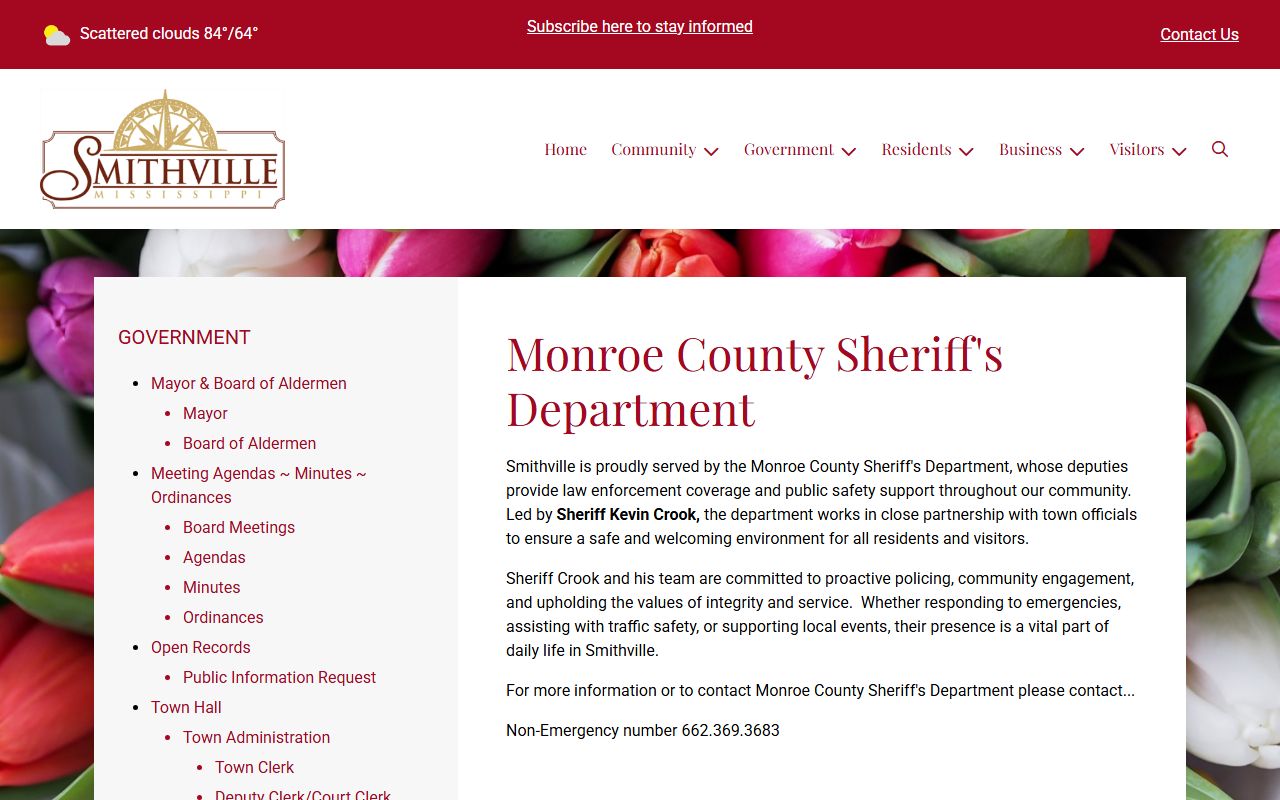
That spread is the reason a phone call beats guessing. For a Circuit or Chancery case, the courthouse in Aberdeen holds the docket. For a misdemeanor or small claim, the Justice Court clerk in Amory has it. For a city ticket, the right municipal clerk has it. Match the case to the court, then call that clerk for the current setting.
Note: Confidential matters such as Youth Court cases, adoption files, and sealed records do not appear on public dockets, so a clerk cannot release a docket the law keeps closed.