
What Monroe County Probate Records Cover
Probate records track how an estate moves through the court after someone dies. In Monroe County, the Chancery Court hears these cases. The work covers wills, estates, and the formal administration that pays debts and passes property to heirs. It also reaches living people who need protection, such as a minor or an adult who cannot manage money or care.
The Chancery Clerk keeps a wide range of probate filings. Common record types include wills, estate administrations, guardianships, conservatorships, trusts, inventories, and accountings. The file may also hold petitions to determine heirs, creditor notices, orders admitting a will, letters testamentary or letters of administration, final accountings, and the order that closes the estate. Each document is part of the larger suit file the clerk builds and maintains.
Mississippi Chancery Courts handle equity and domestic matters. That broad role is why probate, guardianship, and conservatorship all sit on the same docket as divorce, land disputes, and civil commitments. Monroe County shares its chancery bench with several neighboring counties, so the same judges rotate across the district.
The First Chancery Court District serves Monroe County along with Alcorn, Itawamba, Lee, Pontotoc, Prentiss, Tishomingo, and Union. The First Chancery Court District website explains how the district is organized and where its offices sit. The image below shows the district landing page that points visitors toward local rules and clerk contacts.
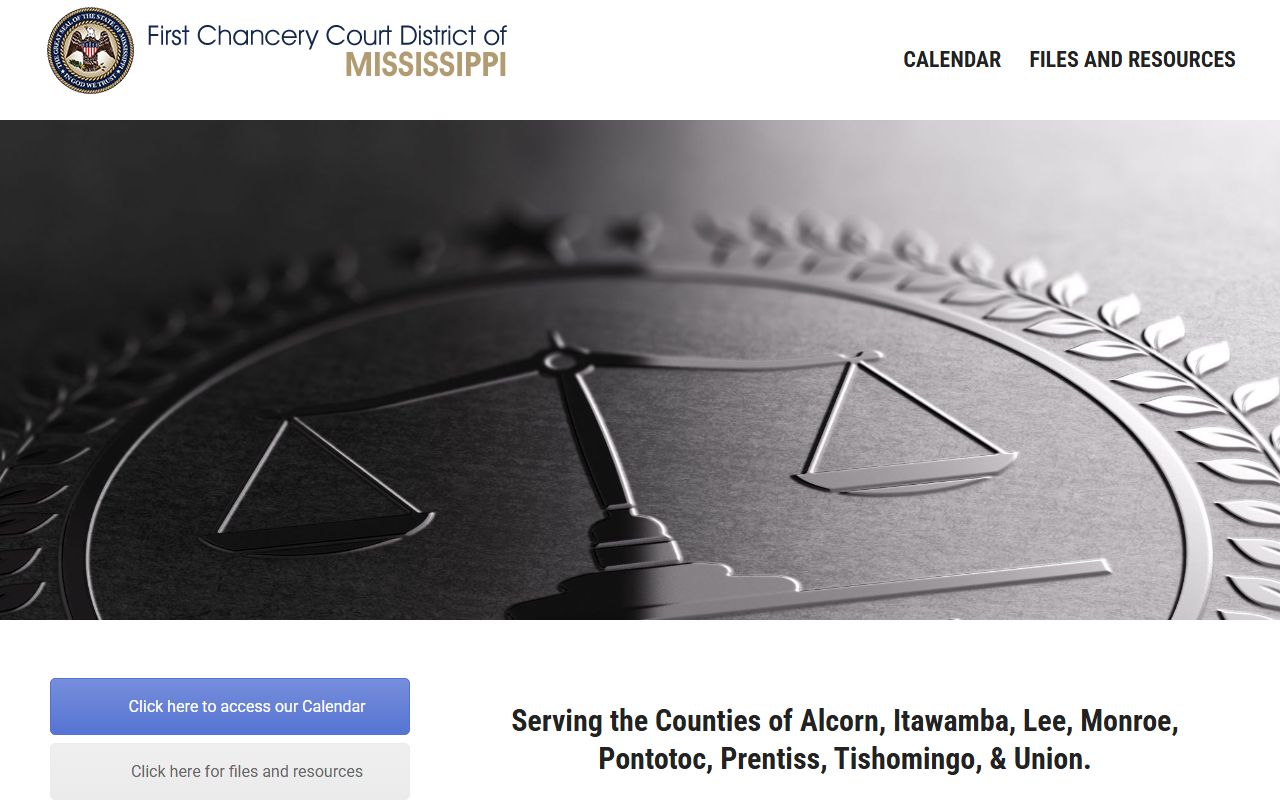
That page is a useful map of the district before any single probate file is pulled. It confirms which counties share the bench and how the chancery system is grouped.
Probate Terms Defined
Probate paperwork uses words that rarely come up in daily life. A short glossary makes a Monroe County estate file easier to read. The terms below appear across wills, petitions, and court orders.
- Testator
- The person who made the will. A testator decides who receives property and who will manage the estate.
- Executor
- The person named in a will to carry out its terms. The court issues letters testamentary that give the executor authority to act.
- Intestate
- Dying without a valid will. State law then sets who inherits, and the court appoints an administrator instead of an executor.
- Guardianship
- A court arrangement where one person is given legal care over a minor or an adult who cannot manage personal needs.
- Conservatorship
- A court arrangement that places an adult's property and finances under a conservator when the person cannot handle them alone.
These roles shape the rest of the file. The named executor, administrator, guardian, or conservator must report to the court through inventories and accountings until the case closes.
How to Search Monroe County Probate Records
There is no single free statewide site that shows every Mississippi probate image to the public. Monroe County probate records are reached through a few separate channels, and the right one depends on the request. Registered users may find some chancery filings through the state electronic-court system. Anyone else can call, mail, or visit the Chancery Clerk.
The First Chancery Court runs on Mississippi Electronic Courts, known as MEC and its public counterpart PAMEC. The First Chancery MEC site is the entry point for registered access. The screenshot below shows that portal home.
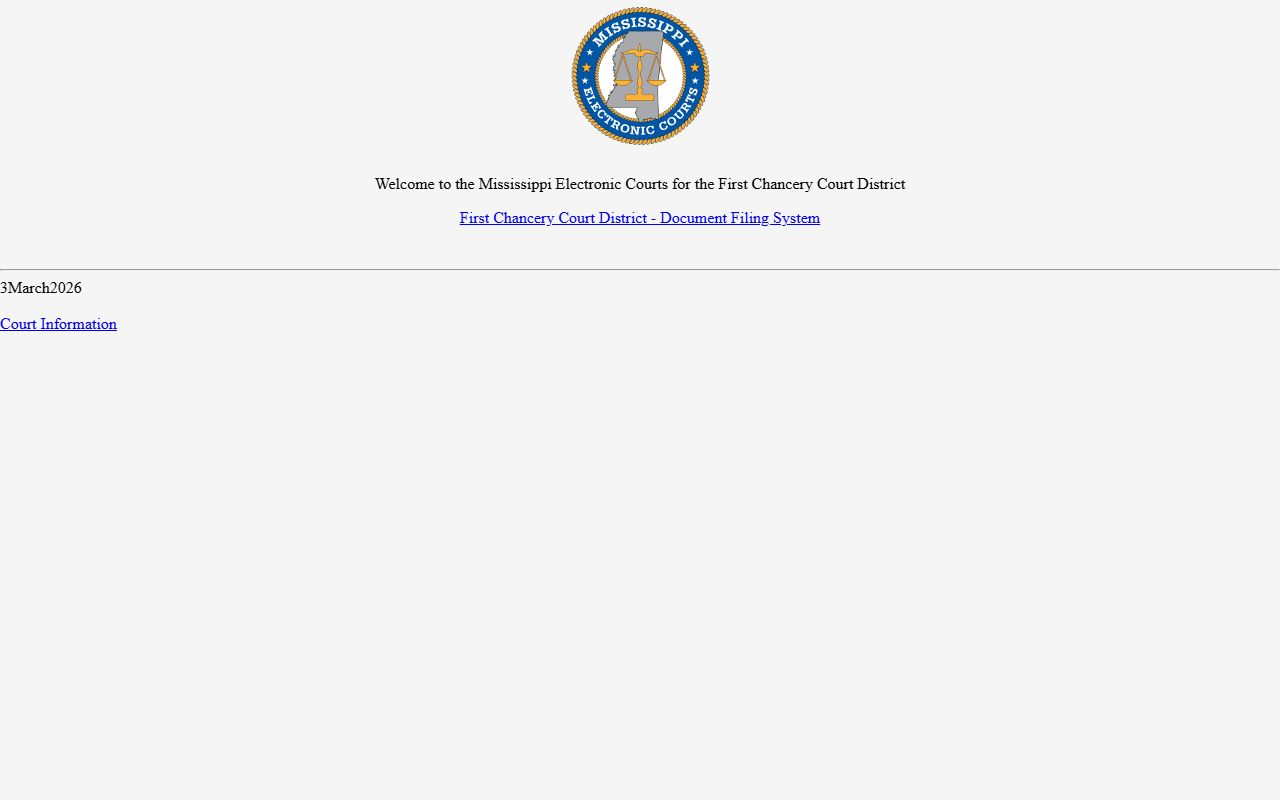
The portal is account based, so a login, password, and client code are needed before any case opens. The First Chancery MEC login page collects those credentials.
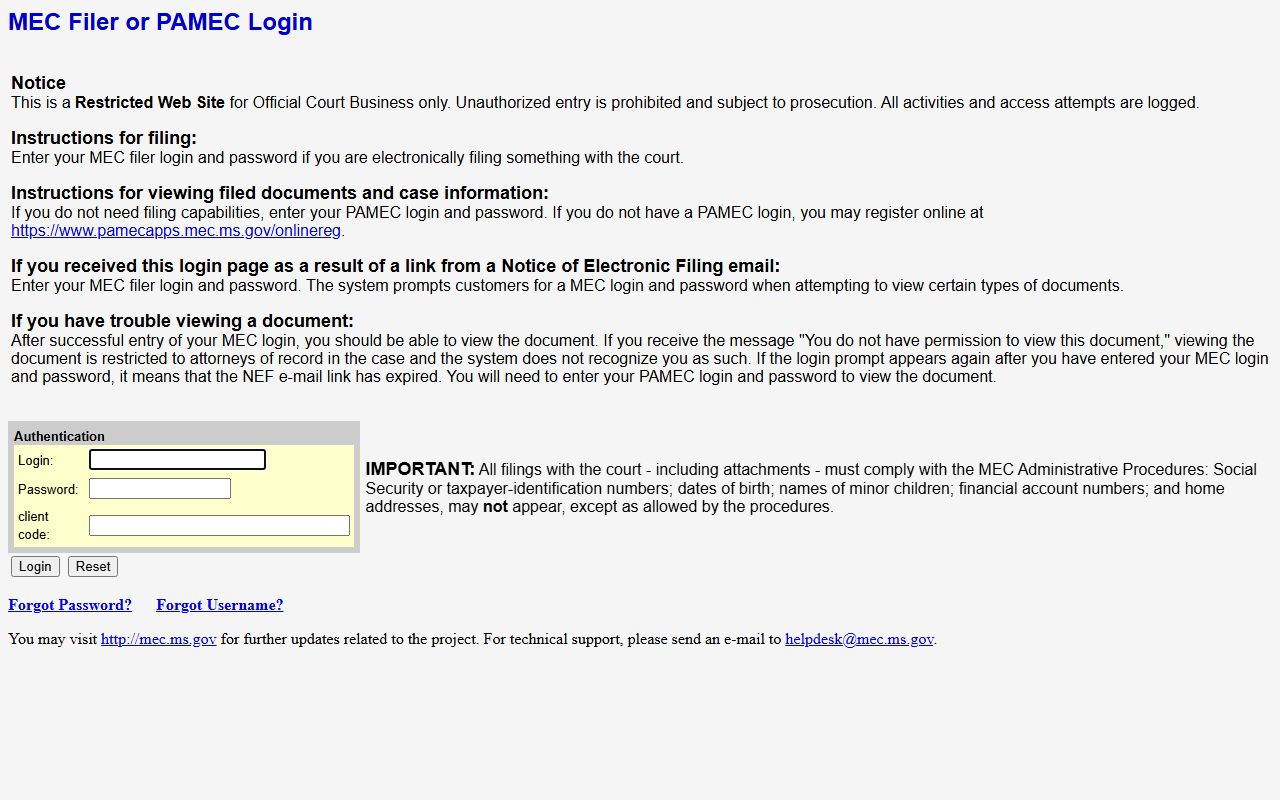
Without an account the login screen is as far as a visitor gets. The fields that gate access are listed in the table below.
| Field Label | Type | Required | Notes |
|---|---|---|---|
| MEC Login | text | Yes | First Chancery MEC credential. |
| Password | password | Yes | First Chancery MEC credential. |
| Client Code | text | Yes, conditional | Required on the login page. |
| Case search after login | gated | Unknown | Full field list is not visible without an account. |
For most families the practical path runs through the clerk. The steps below outline a basic probate lookup.
- Decide what you need, such as a will, an estate file, a guardianship order, or a certified copy.
- Check the First Chancery MEC portal if you hold a registered account with a login, password, and client code.
- Contact the Monroe County Chancery Clerk by phone, mail, or in person to confirm the case number, file status, and copy fees.
- Request certified copies and older files directly from the Chancery Clerk rather than relying only on the electronic system.
Note: Older estate files and certified copies usually come from the Chancery Clerk in person or by mail, since the electronic portal does not hold every historic document.
The First Chancery Court District
Monroe County does not have its own chancery bench. It belongs to the First Chancery Court District, a group of eight counties that share the same chancellors. The chancellors who sit in this district are Jacqueline Mask, Michael Malski, Stephen T. Bailey, and Bradley D. Tennison. They rotate through the member counties to hear probate, guardianship, divorce, and other equity cases.
The district website also gathers the forms and rules that govern local filings. The First Chancery files and resources page lists local rules, a civil case filing form, order-setting and continuance forms, a guardian ad litem list, the Uniform Chancery Court Rules, and the 8.05 financial form. The image below shows that resource library.
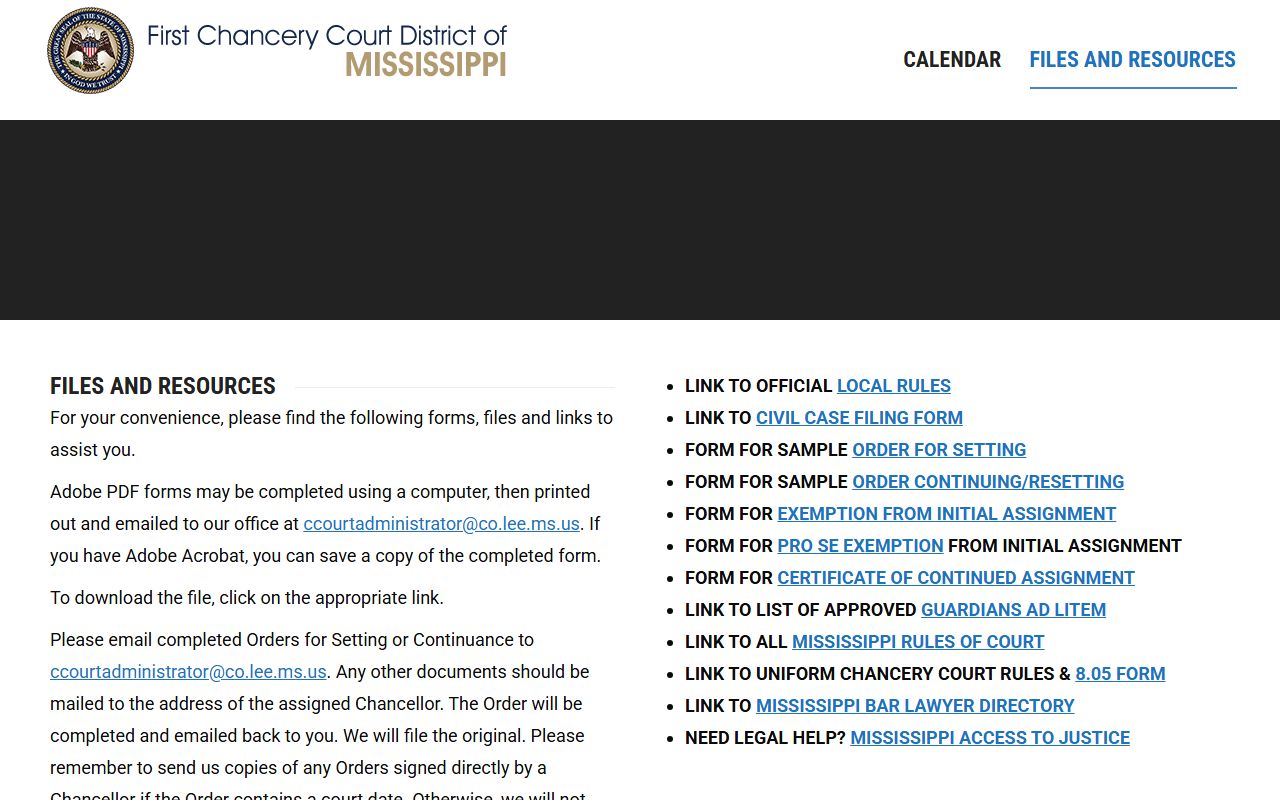
These shared resources are general to the district. Research did not locate Monroe-specific estate-opening forms or a posted small-estate threshold on the official local pages, so the Chancery Clerk remains the place to confirm what a local probate filing requires.
Monroe County Chancery Clerk Contact
The Chancery Clerk is the custodian of Monroe County probate files. Ronnie Boozer serves as Chancery Clerk and works from the Chancery Building in Aberdeen. The office attends Chancery Court sessions, builds and keeps each suit file, issues process, records docket and minute activity, receives filing fees, and processes civil commitments. It is the first stop for a probate copy request or a question about an estate.
Monroe County Chancery Clerk
Ronnie Boozer, Chancery Clerk
201 West Commerce Street
Aberdeen, MS 39730
Mailing: P.O. Box 578, Aberdeen, MS 39730
Phone: 662-369-8143
Fax: 662-369-7928
Hours: Monday to Friday, 8:00 a.m. to 5:00 p.m.
The same office also serves as custodian of public land records, clerk of the Board of Supervisors, county auditor, and county treasurer. Marriage and divorce sit on a different track, since marriage licenses come from the Circuit Clerk and divorce is heard in Chancery Court. Readers comparing those record types can review the county marriage and divorce records guide for the right office.
How Probate Works in Monroe County
Probate follows a fairly steady path from the first petition to the order that closes the estate. The steps below reflect the available official material for Monroe County. Many people hire an attorney, but the basic flow stays the same.
- Determine whether the matter belongs in Chancery Court. Probate, guardianship, conservatorship, and estate administration generally do.
- Contact the Monroe County Chancery Clerk before filing to confirm the current filing fee, the required forms, and whether local rules call for a particular cover sheet or order setting.
- File the petition and related documents through Chancery Court and MEC if attorney e-filing applies, or through the clerk if self-represented or in-person filing is accepted.
- The Chancery Clerk creates and maintains the suit file, enters docket and minute activity, issues process, receives filing fees, attends court sessions, and processes appellate records if needed.
- Request certified copies and older files from the Chancery Clerk rather than relying solely on the electronic portal.
The court information page for the district lists session details and contacts that help confirm where a case stands. The First Chancery MEC court information screen is shown below.
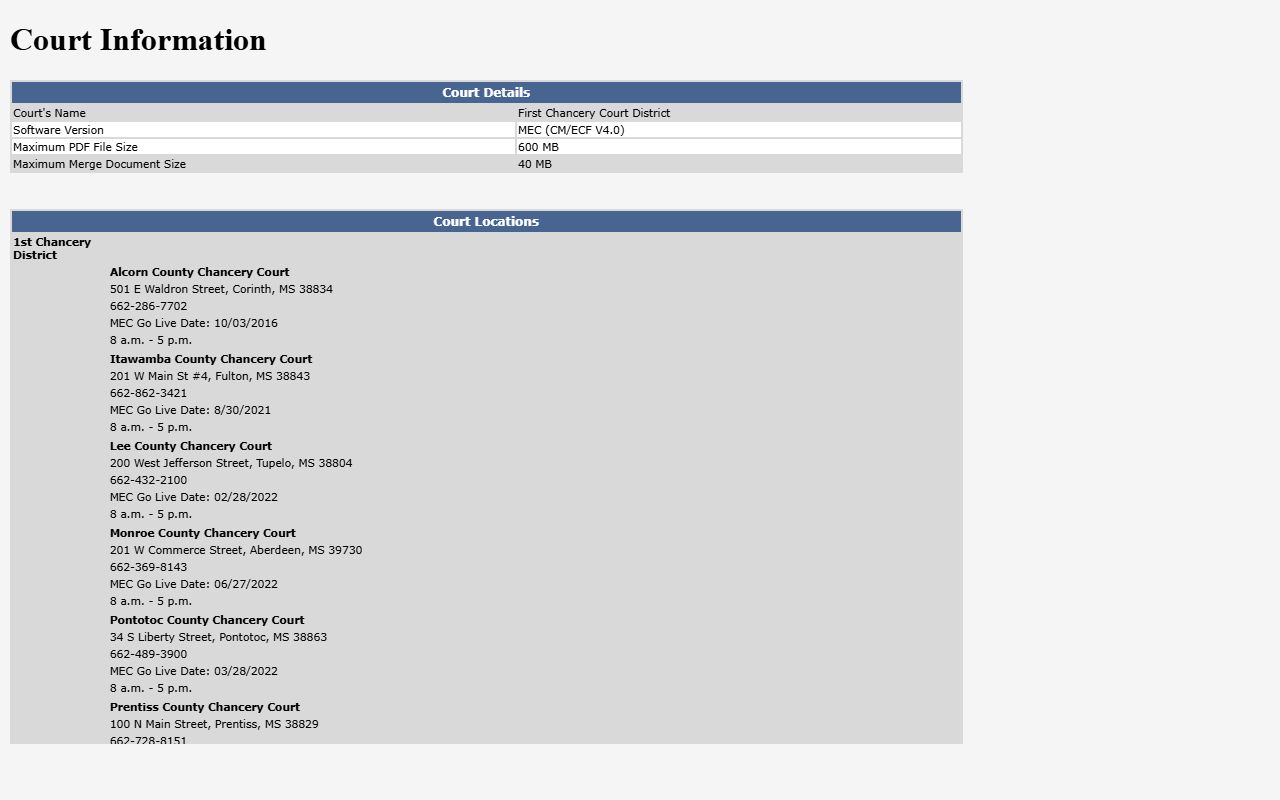
That page rounds out the picture by tying the electronic system back to the chancery bench that hears Monroe County estates.
Filing Fees for Monroe County Probate
Filing fees are a common question, and probate fees can include a charge to open the estate, fees for letters and certified copies, and costs tied to guardianship petitions. Honest guidance matters here. No Monroe-specific official probate fee schedule or probate packet was located in the research, so exact dollar amounts should not be assumed from another county or court level.
The safe approach is to confirm fees directly. The Chancery Clerk can state the current amount for opening an estate, issuing letters, and producing certified copies before any payment is sent. The table below reflects what is actually known rather than invented figures.
| Item | Amount |
|---|---|
| Original probate application | Confirm with the Chancery Clerk |
| Letters testamentary or administration | Confirm with the Chancery Clerk |
| Certified copy | Confirm with the Chancery Clerk |
| Guardianship or conservatorship petition | Confirm with the Chancery Clerk |
Calling ahead also avoids a wasted trip, since payment methods and copy costs are set by the office that holds the file. The Circuit Clerk publishes a public fee list for court records, and a reader who needs that office can review the county clerk of court page for those amounts.
What Monroe County Probate Records Show
A probate file is a running account of how an estate is settled. Early documents establish the will or the lack of one, name the personal representative, and notify creditors. Later documents track money and property as debts are paid and assets pass to heirs.
A typical Monroe County estate file may contain the will and the order admitting it, the petition that opens the case, and the letters that give the executor or administrator authority. It often holds an inventory of assets, periodic and final accountings, creditor notices, petitions to determine heirs, and the order that distributes property and closes the estate. Guardianship and conservatorship files add reports on the protected person and the handling of their funds.
These records can serve heirs, creditors, genealogists, and title researchers. North Mississippi's oldest county records reach back to 1821 and are housed in Aberdeen, so older estate matters may exist on paper well before any electronic system. For those files, the Chancery Clerk is the reliable source.
Restricted Monroe County Probate Records
Not every chancery matter is open to the public. Some files held by the same court carry strong confidentiality protections, and a probate request will not unlock them. Knowing the limits prevents wasted effort and protects sensitive parties.
Adoption is the clearest example. Adoption pleadings, reports, files, testimony, exhibits, and records are confidential under Mississippi Code Section 93-17-25 unless a court opens them by order for good cause. Chancery Court handles adoption, but that does not make the file public. Guardianship and conservatorship records involving minors or vulnerable adults can also be limited, and civil commitment or mental-health matters processed by the Chancery Clerk often include sensitive medical detail that is treated as restricted.
Sealed files follow the same rule across the court. When a record is sealed or a matter is confidential by statute, the clerk cannot release it without proper authority. The Mississippi Public Records Act supports access to nonexempt government records, yet separate confidentiality laws narrow what a court will hand over. When in doubt, the Chancery Clerk can confirm whether a specific document may be released.
Note: Confirm any restricted-file request with the Chancery Clerk first, because adoption, minor guardianship, and mental-health records are protected even though the same office holds them.