
How to Search Monroe County Traffic Court Records
There is no single countywide database that returns every Monroe County traffic case in one search. The records live with the court that issued the citation. For tickets written outside the towns, that court is the Monroe County Justice Court in Amory. For city tickets, the file sits with the Amory, Aberdeen, or Smithville municipal court. The first step in any lookup is to read the ticket and find the court name printed on it.
Once the court is known, a driver can pay or check a fine balance online for many county cases through MyFinePayment. The vendor handles court fines and traffic citations for participating Mississippi courts. Before starting, gather the citation number, the driver's full name, and the date the ticket was written, since the portal matches a payment to a specific case.
The MyFinePayment home page shows the courts and agencies that accept online payment, and the MyFinePayment court fine portal is the starting point for that channel. The landing screen asks a user to pick a court before any citation detail appears.
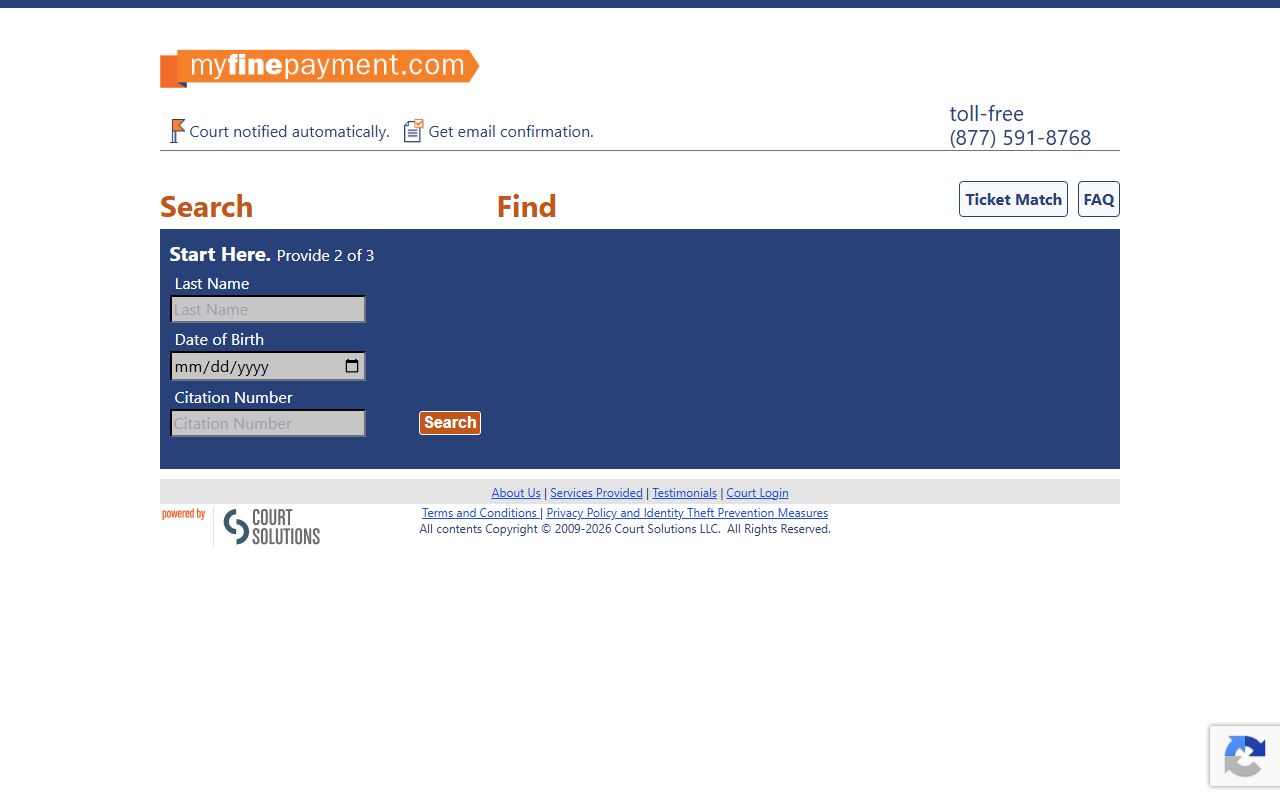
Picking the correct court is the gate that controls everything that follows, so a wrong selection returns no match even when the citation number is right.
- Read the citation and confirm the issuing court is the Monroe County Justice Court or a city court.
- For a county case, open the MyFinePayment portal and select the matching court or payment entity.
- Enter the citation or ticket information exactly as it appears on the paper ticket.
- Review the charge, court date, and balance shown for the case.
- Pay the fine, or call the court to set a date if the goal is to contest the charge.
Which Courts Handle Traffic Cases in Monroe County
The venue split is the single most important fact on a Monroe County traffic ticket. The Justice Court hears traffic offenses that happen outside any municipality, along with county misdemeanors, small claims, bond hearings, and preliminary felony hearings. A citation from a deputy or the Highway Patrol on a county road normally routes there. The Justice Court sits in Amory, not at the Aberdeen courthouse, so drivers should not assume every county matter is heard in the county seat.
City traffic is different. Each town runs its own municipal court for tickets written inside its limits. Amory Municipal Court lists jurisdiction over city traffic violations, municipal ordinances, misdemeanor crimes, and other Mississippi Code matters, and it provides information on arrests, bonds, court dates, and tickets. Aberdeen and Smithville run their own municipal courts on the same model. A driver pays or contests a city ticket with that city's court clerk, not with the county.
| Court | Traffic Cases Handled | Contact |
|---|---|---|
| Monroe County Justice Court | Traffic outside city limits, county roads | 1619 Highland Drive, Amory; 662-256-8493 |
| Amory Municipal Court | City traffic within Amory | P.O. Box 457, Amory; 662-256-5721 option 6 |
| Aberdeen Municipal Court | City traffic within Aberdeen | 125 W Commerce St, Aberdeen; 662-369-4873 |
| Smithville Municipal Court | City traffic within Smithville | Town Hall during business hours |
Note: Nettleton and Okolona maintain city courts as well, so a driver ticketed in those towns should contact the local city court clerk or police department.
Types of Traffic Cases on Monroe County Records
Traffic cases cover far more than speeding. Most are minor infractions that end with a fine, but some carry license points, mandatory court dates, or criminal exposure. The category often decides whether a driver can simply pay online or must appear before a judge. Reading the charge on the citation is the fastest way to tell which path a case takes.
- Moving violations cover speeding, running a light or stop sign, improper passing, and following too closely.
- Non-moving and equipment violations cover expired tags, broken lights, and other vehicle defects.
- Licensing and insurance offenses cover driving without a valid license or without proof of insurance.
- Commercial vehicle and CDL violations follow stricter federal reporting rules for licensed truck and bus drivers.
- Serious or criminal traffic charges such as DUI or reckless driving can move from a citation into a criminal case.
A single stop can generate more than one charge, and each charge gets its own line in the court record with its own fine and disposition.
What Monroe County Traffic Court Records Show
A traffic court record is the case file for one citation. It tracks the charge from the day the ticket was written through the final plea, fine, and payment. The Justice Court or the municipal court keeps these fields, and the same general structure holds whether the case is paid quickly or contested over several court dates. The inventory below lists the fields a driver is most likely to see.
| Field | What It Shows |
|---|---|
| Citation Number | The unique number printed on the paper ticket that identifies the case. |
| Charge / Statute | The traffic offense cited and the code section it falls under. |
| Issuing Court | The Justice Court or the municipal court that holds the case. |
| Court Date | The scheduled appearance date or the response deadline. |
| Plea / Disposition | How the driver answered and how the case was resolved. |
| Fine and Court Costs | The penalty plus statutory and administrative charges assessed. |
| Payment Status | Whether the balance is paid, partly paid, or still owed. |
| Warrant / FTA Status | Any failure-to-appear flag or warrant tied to the case. |
The case papers behind these fields, such as the affidavit and any orders, may be available from the clerk even when they are not posted online.
Paying a Traffic Fine With MyFinePayment
MyFinePayment is the online channel for many Monroe County Justice Court fines. It is a vendor service, not a county-run database, so it is built around payment rather than full case research. The form asks a user to choose a court, then enter the citation detail before any balance appears. A processing or convenience step is added by the vendor at checkout.
| Field Label | Type | Required | Notes / Format |
|---|---|---|---|
| Court / jurisdiction selection | Dropdown or search | Yes | Select the relevant Monroe County court or payment entity. |
| Citation / ticket information | Text | Likely yes | Used for court fines, traffic citations, and related payments. |
| Help phone | Notice | n/a | Call 877-591-8768 if no notice arrives within a week of the court date. |
| Payment controls | Form buttons | Yes after lookup | Vendor adds convenience and processing behavior at checkout. |
The ticket-entry screen is where a driver types the citation detail to pull up a balance, and the MyFinePayment ticket and fine entry page shows those fields in order. A clean match returns the amount due for that one citation.
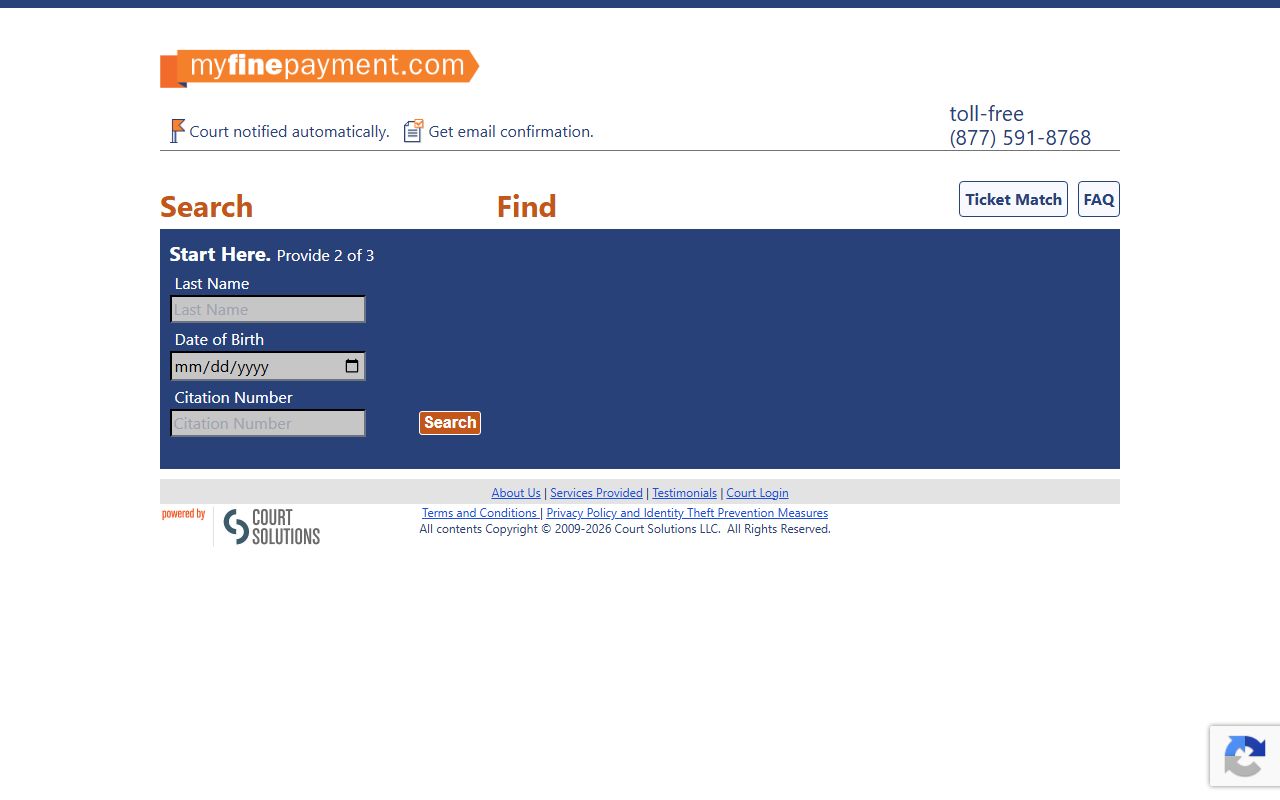
Because the screen is geared to payment, a driver who wants to read the full file or contest the charge should still call the court directly.
Searching by Citation Number or by Name
Two common ways to find a case are the citation number and the driver's name. The citation number is the precise route. It points to one ticket and avoids the confusion of common names. A driver who still has the paper ticket should use that number first, since a single digit entered wrong returns no match rather than the right case.
A name search helps when the ticket is lost or when a household is checking on several drivers. The trade-off is precision. A common surname can return several people, or none, if the court stored a middle name or a suffix differently than expected. Mailed notices and county payment systems still tie everything back to the citation number, so finding that number is worth the effort.
When an online lookup comes up empty, the case may simply not be loaded to the payment vendor. The court clerk can confirm a citation by name, date of the stop, and date of birth, and can read the current status straight from the court file.
How to Pay or Contest a Monroe County Traffic Ticket
The choice to pay or to contest should be made before any money changes hands. Paying a ticket can be treated as a plea or an admission depending on court practice, which closes the door on contesting the charge later. A driver who is unsure should call the issuing court and ask how a payment will be recorded before submitting it.
- Read the citation and confirm whether the case belongs to the Justice Court or a city court.
- For a county case, contact the Monroe County Justice Court, or use MyFinePayment when payment is allowed for that court.
- For a city case, contact the Amory, Aberdeen, or Smithville municipal court clerk listed on the ticket.
- To contest, do not pay first. Confirm the plea options and the court date with the clerk.
- If a deadline was missed, contact the issuing court immediately, because a failure to appear or pay can trigger a warrant or license action.
- For a DUI, CDL, juvenile, injury-accident, or mandatory-appearance ticket, call the court before using any online payment portal.
Mailed payments to the Justice Court take a money order or cashier's check, while the office window also accepts cash and cards. Personal checks are not accepted by mail.
Public Access to Monroe County Traffic Records
Traffic cases are court records, and Mississippi treats most government records as open unless a separate law makes them confidential. The Mississippi Public Records Act sets the framework for requesting nonexempt records from the court that holds them. Fees, timing, and any redaction depend on the custodian, so a request goes to the specific Justice Court or municipal clerk rather than to one central office.
Key Statutes:
Miss. Code Ann. § 25-61-1 et seq. establishes the Mississippi Public Records Act, under which government records are generally open unless another law exempts them.
Miss. Code Ann. § 25-61-7 lets a public body charge the actual cost of search, copying, mailing, and redaction and may require payment in advance.
Youth Court traffic matters, sealed cases, and expunged records sit outside ordinary public access, so a search of a closed juvenile or expunged file should not be expected to return results.
Monroe County Court Records vs State Driver Records
The court traffic record and the state driver record are two separate files, and people often confuse them. The court file is the case at the Justice Court or a city court. The driver record is the license history kept by the Mississippi Department of Public Safety. One does not replace the other. Paying a fine at the court does not let a driver pull a certified driving history, and buying a driving record will not show a live fine balance or a court date.
| Attribute | Court Traffic Record | State Driver Record |
|---|---|---|
| Record source | Justice Court or municipal court | Mississippi DPS |
| What it contains | Citation, charge, court date, plea, fine, payment and warrant status | License identity and status, reportable driving history, convictions |
| Where to access | Issuing court clerk or MyFinePayment | DPS motor vehicle record portal |
| How to correct errors | Contact the issuing court clerk | Contact the DPS Driver Service Bureau |
A driver who needs the certified record can buy it online, and the DPS motor vehicle record portal walks through identity verification before the purchase. The state record is the right document for an employer or insurer request, while the court file is the right one for a citation question.
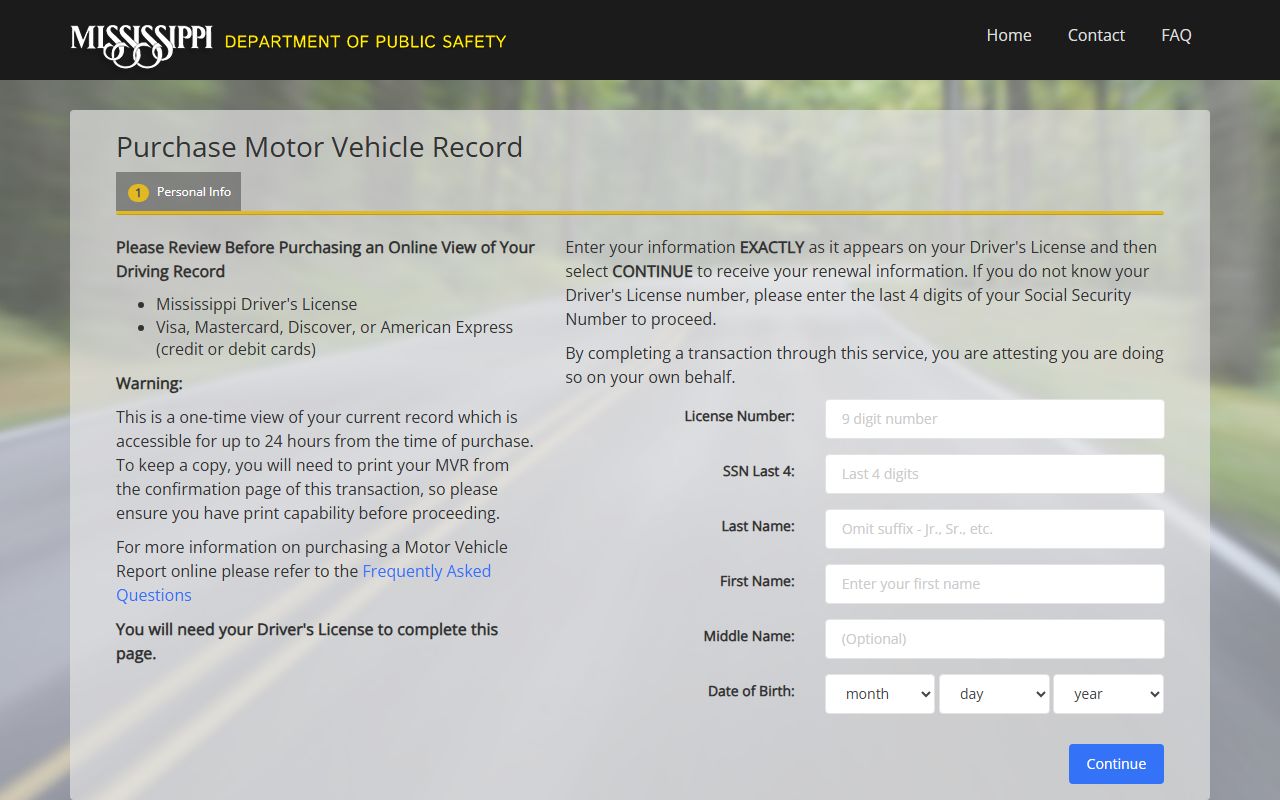
Keeping the two files straight prevents a common mistake, which is asking the court for a driving history it does not issue.
CDL and Commercial Driver Records
Commercial driver's license holders face stricter rules than other drivers. Federal reporting requirements mean a traffic conviction often follows a CDL driver onto the national record, and some violations cannot be handled the way a standard ticket can. A CDL driver should treat any citation as a matter that may affect a livelihood, not a small fine to clear and forget.
The Driver Service Bureau is the state office that issues and tracks the motor vehicle record behind a commercial license. Its motor vehicle records department is where a CDL driver requests the certified history that carriers and regulators rely on. A driver who is uncertain how a Monroe County citation will report should call the court before paying.
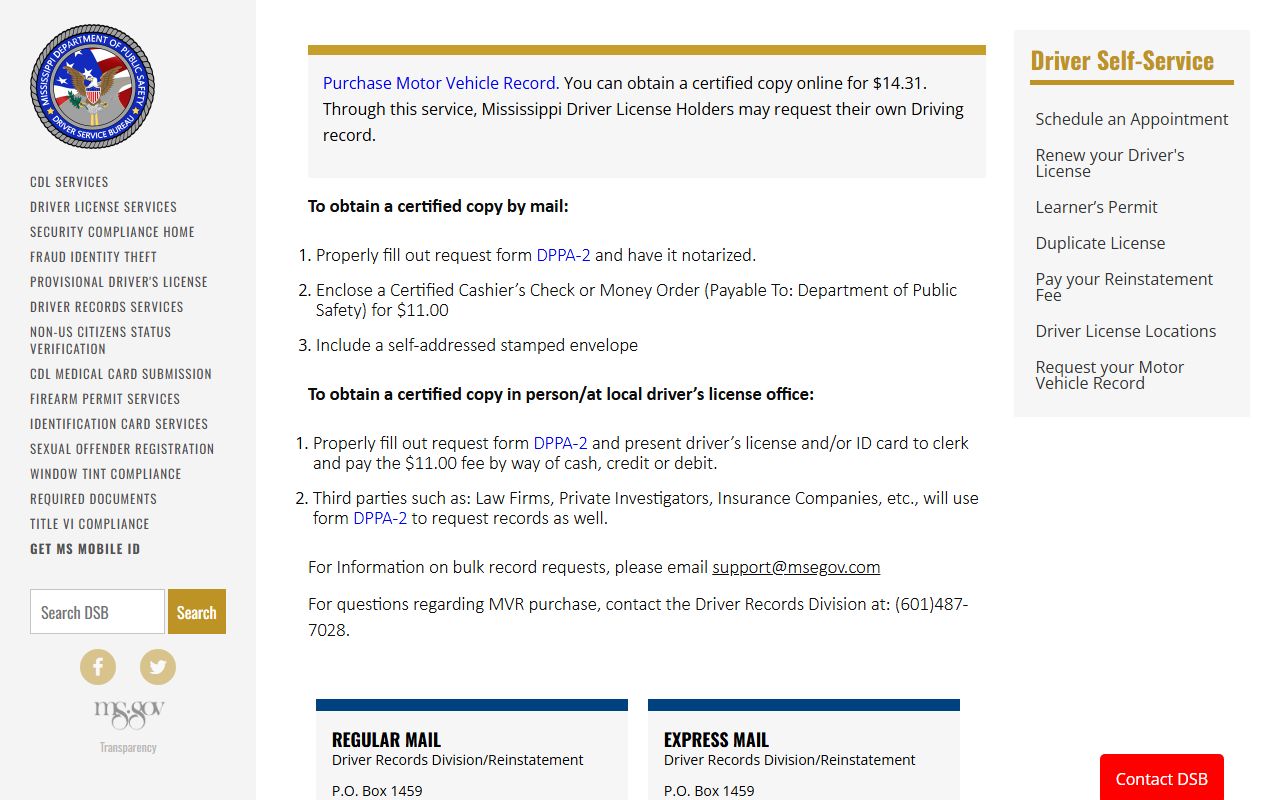
The same caution about paying as an admission applies with extra weight here, since a quick payment can lock in a conviction that reports against the commercial record.
DUI and DWI Cases in Monroe County
Driving under the influence is not an ordinary traffic ticket. A DUI charge carries criminal exposure and usually moves into the criminal court process rather than staying on the traffic docket. These cases involve arraignment, possible bond, and a disposition that can include jail, license action, and a permanent criminal record.
For the full case file, charges, plea, and sentencing on an impaired-driving matter, see the Monroe County criminal court records. A driver facing a DUI should not use an online fine portal as a shortcut, because the case needs to be handled in the court where it was filed.
Crash Reports Are Separate Records
A crash report is a third kind of document, distinct from both the court file and the driver record. It is the accident report written by the responding agency, and it is not by itself a conviction or a citation case file. People involved in a wreck often need the report for an insurance claim, and they should request it from the agency that worked the scene.
The Mississippi Highway Patrol sells crash reports through the state, and the DPS crash reports page handles online orders. Reports for wrecks on state highways, county roads, and city streets may instead come from the local law-enforcement agency that responded.

Because pricing and the responding agency vary, confirm the cost and the source before ordering a report tied to a Monroe County crash.
Sealing or Expunging Monroe County Traffic Records
Some traffic and misdemeanor matters can be removed from public access by expungement. Mississippi law allows eligible dismissals, acquittals, non-dispositions, and certain convictions to be expunged by petition in the court where the charge originated. The driver normally needs the charging document, the disposition or sentencing order, and a zero-balance account sheet showing all fines and costs are paid.
For a county case, that petition goes to the originating court, and the proper prosecutor must be served. When a charge began in Circuit Court, the Circuit Clerk can provide the certified documents needed to file. An expungement that is granted should remove the eligible case from ordinary public view, though private background companies may require a separate dispute.
Fees for Monroe County Traffic Records
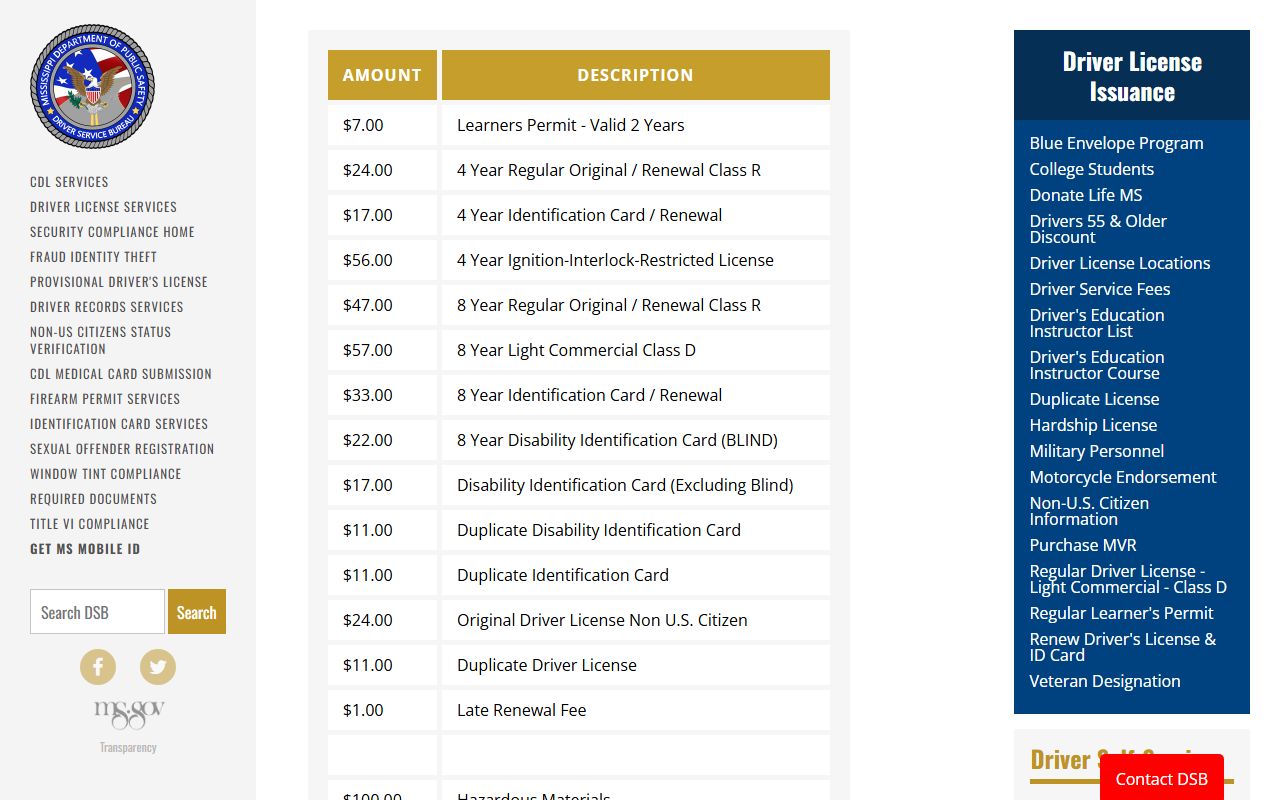
Fees fall into two groups. The court charges for copies of a traffic case file, while the state charges for a certified driving record or a crash report. The driving-record price is not fully consistent across DPS pages, so the figures below are presented as published, with the conflict noted rather than smoothed over.
| Item | Amount |
|---|---|
| Certified online driving record (DPS MVR) | $14.31 |
| Vehicle record / driving record base fee (Driver Service) | $11.00 |
| Highway Patrol crash report, in person | $15.00 |
| Highway Patrol crash report, online | $20.00 plus $5.00 handling |
| Justice Court or municipal copy fees | Set by the issuing court under the Public Records Act |
The DPS portal lists a certified online driving record at $14.31, while the Driver Service fee page separately lists a vehicle or driving record at $11.00, which is likely the base fee before online and portal charges. The Driver Service Bureau publishes its own breakdown, and the Driver Service fees page is the source to check before paying.
Copy fees for a Monroe County court file are set by the issuing clerk, so a driver should confirm the per-page and certification charge with the Justice Court or municipal court directly.